Wednesday, December 30, 2009

the pros&cons

(for PSG)

The Pros are easy to recognize. They are discernible by uniform, which is not to say sports ensemble (although that can be present in certain circumstances); rather a uniform haircut, a uniform suit, a uniform smart-phone slipped in a pocket, uniform black shoes, trousers which hang in a uniform manner, a uniform way of walking, a uniform accent, and a checklist of approved conversational phrases. The Pros are pros, alright, and can be spotted (and thereby avoided, excepting in unusual circumstances) from some distance.

The Cons are often more nuanced. Some of them have worn uniforms during periods of involuntary incarceration, but mostly the cons are concerned with individuality, creativity, flair. Finding a way out of a lifestyle of uniforms, recreating the rules. Some of them walk with a spring in their step. Some of them slither. Some of them saunter. Some of them skip. Some them limp. Some of them lumber. Some slouch, some have erect posture. Some are confidence tricksters, out to out-ponzi Ponzi, to marry wealthy widows, to acquire titles to cars, land, houses by dint of force of personality rather than manual labor. Some are the tradesmen, the artisans of the criminal world, the lock-pickers, the break-&-enterers, the forgers, the crime ring run underneath the dry cleaners or convenience store or hot dog cart. Some of them are technocrats, building networks of identity theft, credit card fraud, phishing operations, or sometimes even the traditional mail fraud.

Sometimes the line between pro and con is fluid. Someone grows tire, bored of the sheep-like existence of being a pro, begins itching under the collar, stops placing a quarter in the tin for coffee, starts stealing paperclips. The path away from pro starts small, never valued over a dollar, never uniquely traceable. It may slowly morph to gray areas: using company time for reading theater reviews, absconding with a stapler (clearly marked with a company logo, perhaps even barcoded); slowly grows into borrowing parking spaces reserved for other employees or visitors.

The pro begins to wonder: with so much empty time during the day to fill, so few external checklists, why not? Why not use the time to research safe deposit fraud, to develop a system for commandeering an armored truck, to develop a new snake oil or miracle product that offers a high return on investment, turning paper into gold, the alchemy of the business world?

Most pros remain steadfastly in the gray area, a small zip of pleasure for every redeployed office legal pad, a frisson of excitement knowing they took the reserved space, a leery grin from a too-long lunch break. Some pros, though, take the plunge and turn con. They may stay in the system, a newly valuable personnel resource due to a discovered problem solving ability, mental ingenuity brought to bear for both personal and professional gain: a tiger thus kept within the zoo, fed red meat, given perches to climb, but on some level domesticated and feeding the voyeuristic tendencies of the masses below. Being an in-house Pro Con has definite advantages: an on-call legal team, a fleet of secretaries, arranged transportation on demand.

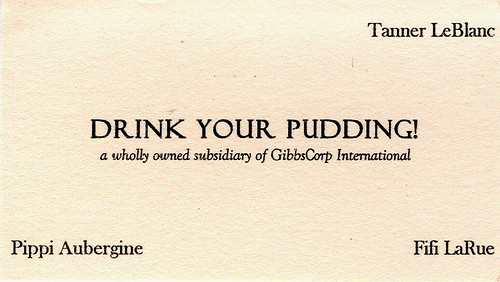
Other pros, renegades, go freelance, preferring the freedom and flexibility of the self-employed con to the enabling but emasculating support system of the pro. They give up corporate jets and preferred flier status and prepared itineraries, taking on the risks and headaches of commercial aviation and with it the ability to become someone else at the exchange of a briefcase, the acquisition of an overcoat, the assumption of a sports car, the rearranging of a name. The freelance con has an array of business cards, fit for every occasion, a network of partners available for temporary hire or delegated subcontracting, a freedom from quarterly meetings and graphs of financial expectations. The freelance con has charisma, subtlety, and improv tactics that the pro can only dream of.

Sometimes the con flirts with becoming a pro again: the bagels and orange juice provided every Friday morning. Sometimes the freelance con considers rejoining the system, supported by a bankroll padded by friendly insiders, freed from organizing the minutia of the details. Sometimes the freelance con solves the conundrum with a bit of lucrative consulting for the pros: a five star hotel, chauffeur, bagels and orange juice, a well endowed cheque in payment for conceptual services rendered. Win-win-win.

Consulting, though, is a cheap thrill: the hooker hired out for a half-hour on the side, rather less rewarding, ultimately, than the double lifestyles, the families in separate cities or the lovers waiting at various ports, representatives of potential lives awaiting the arrival of the main actor. So consulting is kept to a minimum, the con truly enmeshed in the art of prevarication finding more room for exploration in the offerings of a well funded free enterprise system, opportunities galore in foreign aid, farm subsidies, international exchange rates, drug cartels, the pharmaceutical industry, the knowledge industry, entertainment.

Especially entertainment: how the pros desperately want to experience free fall, but free fall with both a bungee and a parachute; a life on the run, but with the local pharmacy already having filled the prescription for cholesterol lowering medication; the dastardly decadence of a double life, but with one's favorite pair of socks neatly laundered, matched, and waiting in the bureau. The con can do quite well in the entertainment industry, selling inner lives and the ubiquitous necessary accessories to pros that desperately require directions for what to think, feel, experience next, and eagerly pay for the privilege of receiving further instruction.

Of course, the true con will grow restless with the system there created, the too-accessible farm-raised game eagerly offering itself to the abattoir, and move on to the next game: the vaguely unstable almost democracy (in need of a minor military coup to bring the national interest into line with foreign policy), the newspaper with a majority holding stake for sale, the stock exchange where millions can be made exploiting digital lag times and margins of error. It is not unknown for the con to take up a dash of gun-running, a smattering of intelligence leaking or exchanging, sometimes even going so low as to seduce an heiress, but this is all filler while the next project awaits fruition.

In the meantime, look beyond the obvious pros for the hidden cons: recognize the swagger, the smirk, the self-confidence; watch and learn, escape the uniform existence of the pro for the constructed improvisational play of the con.


reading
the magical Murakami, Blind Willow, Sleeping Woman
& delving into these essays:
on food & sex
on modern friendships

weather
let it snow
let it snow
let it snow

Tuesday, December 22, 2009

merry merry


may your days be merry and bright
and may all your Christmases be white


The process:

Find snowflake graphic.


Make stencil (cut out, coat liberally in boiled linseed oil).


Stencil with paste/acrylic mixture.


Stencil with wax (used Renaissance wax, following tests of various wax options).
Dye in Tinfix dye.


Stencil with glitter.


Fold along score lines.
Stamp in silver foil. Write cheery holiday message.


Cut along base lines.
Glue together.


Fold into paper bag shape.


Insert lit candle. For optimum household safety, add 1" or so of sand before adding candle.


Disclaimer
: the finished luminaria pictured above are the "rejects," and here displayed because they were the first ones completed (in time for a command appearance). The editioned luminaria are still in process, but on schedule for a new year's mailing.


DYP! is participating in a holiday mac&cheese bake-off, and will return next week.


reading
Up in the Air / Walter Kirn (of course)

weather
wonderland

Wednesday, December 16, 2009

Cynara scolymus


The postcard box is nearly empty, but it is time to compose. Not a lengthy note that would justify one of the cards with matching envelopes, not a letter of substance that calls forth cold-pressed stationary, but merely a penny tossed into a wishing well, a postcard to send affection across town, state, or country lines.

But which postcard? There is no need to use one of the highest ranking, the talismen of childhood, the favorite postcards collected and saved to be shared only when a kindred spirit is sent a token of esteem. If that were the case, then out of the box would come pieces of the past, records of amusement parks long since closed, historical markers for locations now become parking lots and strip malls, images of forgotten bronzed dead white men from trips hither and yon in years past.

The recipient is not so much a part of life to receive a piece of a treasured past, or to create a new past memory with, based on events that only happened conceptually, the theoretical trip to Rapid City, the almost departure to Marfa, the potential descent into the Grand Canyon: the recipient never took part in the planning of any of these almost-excursions, and so has no part in receiving a notice from one of them.

But what, then? A starkly geometrical art card, delineating a still life of some type of Cubist breakfast, a world of square coffees and triangular newspapers; a landscape of exceedingly prim New England autumnal splendor, captured by watercolor in the 1880s and printing using unquestionably inaccurate color matching by a museum publisher a century later? A reproduction of a Victorian exploration of Yellowstone, obviously staged then, canned and sadly stale in its desperate nostalgia now?

None of these are quite right, yet the nature of the communication demands a postcard and no other form. Not that this message will be the wish-you-were-here category, not that an image is required to secure understanding in a post-literate world, not even that the recipient will necessarily be aware of the subtle ranking system that distributes cards according to degrees of intimacy; simply that an external limit on size and a public accessibility of content naturally distance the potentially invasive fact of sending a postcard, in a society which distances itself from physical tokens. So the dilemma remains, the appropriate postcard is not currently owned, may never have been owned, but the format is inarguable.

The solution is obvious, a voyage of discovery, a trip undertaken to acquire a token of appreciation for someone not yet close enough to communicate with by other means, yet placed here at the center of a quest, raised to the level of pilgrimage in search of a vial of holy water, a scrap of a shroud, a stone from the foundation. The destination is to enter the mind of the recipient, not plottable on any map, but can perhaps be located in a shoebox in an antique store, a gift shop on a trendy main street, a gas station on a partially abandoned state highway, a collection in a gallery.

Were the recipient a degree or two closer, the card could be handmade; were the recipient in the inner circle, the shared past could be given; but loitering in the grey areas of established connections, only this journey, whose true purpose can only ever be surmised and supposed, is possible. An hour later, a day later, perhaps a week later, a card finally found: perhaps a barn or a tractor, a river or a skyscraper, a pig or a 1920s automobile; a cup of mediocre coffee at a slightly dingy table in a coffeeshop next to the store, a pen.

And? And how does one write "for you I have traveled near and far, to send this message which you may not understand, to say what can only be alluded to and decoded by intuition rather than direct statement"? On the back of a paper shopping bag, scribbled unsent messages:

"The show was a rousing success, and I appreciate all your help in bringing it together."

"Sympathies on the loss of your pet squirrel and all best wishes for the weeks ahead."

"I found a recipe for chicken poached in a wine reduction, then lost it, but thought you could try to duplicate it."

"The show at the museum has color, excitement, passion, but the gallery is full of attendants dressed as bouncers, who hover too closely for one to appreciate the joy of the show, but instead make everything feel like a documentary of a penitentiary."

"Thanks for including me in last week's dinner party! It was delightful playing charades by candlelight, and next time I promise not to shatter two wineglasses and a Dresden shepherdess."

"Congratulations on your degree! While the world may not need another investment banker or litigation specialist, knowing that the field of Greek Drama has just gained another specialist somehow reassures me that civilization is on the right track."

"No, I really do not cheat at Scrabble, and if you are determined to accuse me of such then our friendship, such as it is, cannot continue."

None of these are quite the right message, though all of them are true. What is the way to write
"We live in different worlds, speak different languages, value different currencies, eat different foods, read different books, but, here, the recipe for a scrumptious cake, the combination to the safe at the downtown bank, the key phrase to the local speakeasy, all of this I give to you, the only knowledge I know how to share"?

Instead, I doodle a bit in the borders of the paper sack, slosh some of the mediocre coffee onto the napkin, listen to the old men at the next table over discuss the talking points of congressional impasse without contributing to any further political change. On the margins I start a to-do list, to email the office of Bernie Sanders and show appreciation, to call my grandfather, although then I remember that he died five years ago, and my glance falls again on the unwritten postcard.

If the recipient were someone else I would write of all the magic that my grandfather held in his hands, the building of stone walls, baking of bread, nourishing of fig and apple trees and rose bushes, making of sausage, designing of houses, conducting along with mono recordings of Bernstein and the Boston orchestra, all with a thumb that was grafted onto his left hand from a piece of his hip after the misfortunes of Iwo Jima. But this is not that postcard, my love letter to a grandfather pontificating on politics and compound interest and drinking sweetened coffee and biscotti is different, materially different, from the postcard I am writing from a borrowed table to a person who may simply be a projection of an idealized life.

"Greetings from the final frontier. The sun sets over the White Mountains turning everything fuchsia and tangerine, the trees illuminated against the snow, and anything and everything is possible."

"I got lost on an unmarked back road following an old canal route, and discovered an abandoned Victorian mineral springs. It looks nothing like this."

"The ferry was over-booked and an hour late, the bay beginning to ice over, but to taste the salty tang of the sea: I have arrived."

All of this is true, but none of it what I wish to convey. The coffee grows bitter and cold, the sun sinking in the sky, and I confidently write the address, affix the stamp, begin with the date:

"16 Dec. 09. An unexpected journey with an out of date map to the rural woods of Connecticut, in search of abandoned cities, which lurk just behind the line of trees by the river. The foundations ooze with forgotten memories, and the refuse of lives lived and then abandoned. So much for navigating using 1860s maps and a pin-the-tail-on-the-donkey navigation system! Sincerely, "

It leaves too much unsaid, the sound of leaves frozen and cracking underfoot, the smell of woodstoves, the slate grey of the sky, the pureness and brittleness of the winter light. It says nothing of the hopes of the journey, the reason for the pilgrimage, the return to reality, the empty postcard box at home. But it is stamped, and it is sent, consigned to the kindness of the postal service, to rattle in a mailbox across town, across the state, across the country.


reading movie review! A reason to appreciate the season, what with a new Terry Gilliam due over here sooner rather than later, and a full-length stop-animation claymation number in French (with subtitles). Bliss.

weather
not so blissful

Wednesday, December 9, 2009

commencements

Start over.

Reset. It never happened, wipe the slate clean, smile politely, be a stranger or a cordial acquaintance. Empty out the apartment, scrub the floors, move everything back in, post a new name on the mailbox, get a new phone number, be the entire past year or 5 years or 10 years all over again.

Start over.

All of these people are strangers, public masks hiding an inner life that may reveal its secrets when opened with the right key, faces hiding a thousand potential friends, lovers, collaborators, colleagues, people filled with the simple beautiful joys of daily life, wishing success and contentment to the fellow man.

Start over.

This is the year of a half-hour cardiac work-out daily, the year of not procrastinating, the year of telling the truth, the year of vacuuming three days a week and mopping every other, the year of dusting the bookshelves and ironing the tablecloth and paying quarterly taxes on time and writing letters to elderly relatives whose lives are preserved in a dome of unchanging monotony, for whom the letters are a break of sunlight in an oppressive silence.

Start over.

New name, new phone number, new public persona, new presence, new shoes, new wardrobe, new haircut, new reading material, new grocery list, new car, new bicycle, new museum membership, new hobbies, new dog, new laundry detergent, new perfume, remember a new childhood, a new third grade math teacher, a new eighth grade science fair project, a new finesse with advanced mathematics.

Start over.

Change pens, write only in purple or green ink. Buy a new notebook; on the first page list all favorite words, spoken mannerisms. Draw an X through the page, cut them out completely from the written and spoken record. Switch dictionaries, use a new brand of printing paper, instead of replying with the traditional conversational stock phrases try new ones: the dialect of a midwestern farmer, a southern belle, a cowboy, a surfer.

Start over.

Empty out the fridge and pantry. Donate all the unopened foodstuffs to a food drive. Discard the rest. Spend six months somewhere else, Chile or India or Cambodia or England, then return and be the person one became while away from the home territory. Eat yak butter or tofu or roasted pork or mushy peas, cook as the indigenous peoples cooked, and carry that sense of the other back into the home.

Start over.

New address book, diagrammed by length of knowledge of the other person. New calendar, entries color coded and arranged by importance. New stamps. New speed dial assignments. New Christmas card list. New expectations.

Start over.

A blank slate, an uncommitted calendar, requirements to no organization and no person other than one's self. Reintroduce self to self, make one's own acquaintance, then look at the pristine radiance of the glowingly unscheduled fifty-two weeks of possibilities, and give each of them, a gift, to a stranger who will never be seen again.

Start over.

Empty out the sock drawer, discard everything lacking a pair, with worn down heels, a hole at the toe, stretched out in the ankle, faded to a pale approximation of what it once was. Repeat with tights, underwear, slips, through the myriad drawers of the dresser until the worn out past is purged, and the drawers reflect only the trousseau of the future, pajamas in order and handkerchiefs embroidered.

Start over.

Begin with the career. Consider a vocation instead of a desk job, or replace a hands-on approach with computer training or a certification in accounting or triage or find a field which is disappearing through stagnation or apathy and excel at it, just to master that which will soon be obsolete. Make a list of all the certifications offered by the state: cosmetology, contracting, tax preparation, plumbing, auto body work, chiropractor, day care operator, lawyer; place them each on a strip in a hat, and choose your own adventure, a profession awaits.

Start over.

Cancel all newspaper and magazine subscriptions, delete all online journal accounts, go to a newsstand and pick up half a dozen titles that are either newly published or so vintage they were presumed dead. Take out the subscription cards, and allow these six publications to arrive by post weekly or monthly or quarterly for the next year. Read them, all of them, cover to cover, even if the editorial slant grates, each issue. At the end of the year, you are no longer only you, you are someone who incubated inside those half dozen editorial offices, someone composed of the otherwise unconnected readerships of those six journals.

Start over.

Learn Latin, Greek (ancient or modern), Russian, Swahili, Arabic, Spanish (European or American), French (Parisian or Quebecois), English (British or Australian), Chinese, Italian, Portuguese, or a forgotten Eastern European variant of Slavic.

Start over.

Purchase a copy of Hoyle's and learn a new card game, teach it to all siblings, cousins, aunts at the next holiday gathering, then make a weekly commitment at the nursing home or senior center to play that new game, there, with everyone, on Tuesday mornings at ten an Thursdays at two.

Start over.

Purchase a copy of Mr. Boston's Bartender's Guide, and work through a new cocktail recipe each week. Enroll in bar tending school, spend the evenings of a long dark winter and a leisurely summer gathering a crowd of devotees at the local bar, eager for the new recipe to be unveiled, champagne cocktails or variations with vermouth.

Start over.

No longer awaken to the dulcet tones of the old standby on the FM dial, delete the preset memory buttons on the car radio, give away the driving cds that accompany the daily commute. Each week move one station up on the radio dial, and that station, for the next seven days, provides the wake up call, the choreography to the commute, the working music, the preparation for slumber. Don't cheat, don't take notes, don't look for the familiar programs when traveling around a new city, exist instead in the acoustic reality of someone else's world.

Start over, but do so by staying in place, by re-ordering the outside universe rather than trying to erase the lines of reality. Start over by embracing new experiences and identities rather than hiding in the cocoon of comfort, by greeting the outside world with open hearted compassion and generosity of a type usually reserved for the politeness of strangers. Start over by allowing the stories you've heard before to sound new again, and re-scripting the stories that have been told a thousand times to change the metaphor, the hero, the villain. Start over, at home, in the family, within the community, by leaving and returning, emptying and refilling, discarding and replacing, repainting, polishing, waxing. Start over, turn the page, turn down the blanket, reset the clocks, refold the napkins.

Start over, breathe deeply, and begin.


reading
Heifer International Christmas catalog

weather
Ugh. You try shoveling five inches of heavy wet snow with a bum wrist, and report back on the experience.

Wednesday, December 2, 2009

the nonoccurrence or absence of something

{def.: negative evidence} | {note to readers: I pronounce 'poem' with 2 syllables.}

I do not intend to write a poem right now. I have never intended to write a poem, and poems are little creatures who require a certain amount of cooperation from the opposable thumb and pen and paper to come into being; even if the definition of "to write a poem" is expanded to embrace performance and oral history rather than dreary literacy, intention is still necessary for a poem to be something other than a particularly memorable combination of words brought forth at an auspicious moment. If I intended to write a poem, I would become, thence, a poet, or, in a vaguely derogatory way, a poetess, as gender dictates.

How is it that one becomes labeled a poet merely by ones intentions -- pejorative adjectives may be brought out in support of a critic's cause -- but merely thinking about fixing a dripping kitchen faucet doesn't make one a plumber?

How does one actually go about fixing said (purely hypothetical) leaky and/or dripping kitchen faucet? That there is a (purely hypothetical) leak or drip is as measurable as the pile of unwritten and unmarked papers, awaiting ink. A bowl placed under the faucet fills overnight: the faucet is seen to drip. A bowl placed under the u-bend pipe under the sink fills over a two month period: the faucet is seen to leak. All hypothetically, of course. How would one, poet or not, seek to influence the course of the water to remain in the faucet, inside the hundred year old pipes, inside the water system, inside the aquifer, deep in the recesses of rocks underground or reservoirs residing above sunken villages, all of these places the birthplace of water, rather than a continued journey into the sewer system, processed through to the ocean?

Considering the pipes, the pathway still does not make the observer into a participant, much less into a plumber, any more than I could bore you to tears and solve an insomniac's dilemma by discussing rhyme schemes, Italian versus English sonnets, free verse, odes; could read aloud from rhyming dictionaries or create paint-by-number games of fill-in-the-blank to write a poem. But all this purely conceptual grammar and structure and style and one may be considered a poet -- even without a rhyme scheme demonstration to be seen, without a clause or a haiku or a syllable or line count.

Even the non-plumber who finds a battered copy of Reader's Digest Home Repair Manual, 1983 edition (which is still newer than the plumbing by at least a generation), who traces threading of pipes and joint orientation, who may even go so far as to locate the main knob for turning off all water to the residence so that repairs to a hypothetically dripping and/or leaking faucet can be instituted without further plumbing woes -- even the knowledge that there is a master control of water to a house -- none of this turns the non-plumber into a plumber, in anyone's eyes.

There may be a wrench, a set of wrenches, sealing tape, a new pressure washer, all neatly laid out on the kitchen counter, easily accessed by someone standing at or crouching underneath the sink.

There may be a row of newly sharpened number two pencils, a fountain pen with a fresh cartridge, a spiral notebook or lined paper, all awaiting the flash of inspiration, or all existing to refute the concept of inspiration, instead becoming home to a grocery list, a reckoning of household budgets, a letter to a forgotten cousin, a copy of a recipe for chocolate cake with cream cheese icing. However, if the pencils were sharpened with the hope that from the lead might appear poetry, laid out in lines of beauty and art, then even the appearance in their stead of the grocery list or the phone message transcription or the name of that book to order from the bookstore become but temporary placeholders for the true message of the poet, deeply engaged in the recesses of meaning of the most mundane. The writer thus is a poet.

Glance back at the kitchen counter, the highlighted diagrams of pipe fittings, the bowls of washers separated by size, the wrenches waiting for their moment of glory, perhaps even the uniform of badly fitting blue jeans and too-tight t-shirt, a tape measure at the waist. Still not a plumber, just an impostor, a pretender, an optimist. Still the faucet leaks and/or drips (hypothetically, of course), needlessly displacing potable water that in some parts of the world is more valuable than gold. Even those hesitant first steps -- of turning off the water, of double checking the faucet to make absolutely certain that the water really is turned off, of tentatively loosening the most obvious joints in the plumbing: one becomes foolish, a meddler, but not a plumber.

Soon a small pile of pipes and parts has begun to accumulate on the counter next to the diagrams and wrenches and potentially useful spare parts: perhaps a truly organized worker knows to take photos every time a part is removed, labels or diagrams how they fit back together, though this is unlikely.

Soon there is a pile of faucet parts scattered amongst spares and unknown pieces, rather akin to the orphan adjectives left floundering in the margin of the paper, favorite, evocative words to be invoked and set into their proper place in a poem that has not, is not, will not be written. The pile of adjectives is a give-away, though, that requires a stronger alibi than the disingenuous claim to not having the intention of writing a poem. Anyone can casually scribble out a phone message on a pristine sheet of paper with a perfectly sharpened pencil, but to begin toying with sentence structure, line breaks, word choice, to rough out a variable or two in the margin: this begins to test plausibility.

Suddenly it is dinnertime and time to wash dishes or fill drinking glasses, the random assortment of parts placed in alignment next to the diagram, none of them with a marking of "replace me!" or "piece worn out" or "a connects to b", just the deeply cherished belief that once they are all miraculously fitted back together over the bowl of the sink, then the leak and/or drip, which was only hypothetical to begin with, will no longer be a source of trouble or concern to those with even the wildest imaginations of empty bowls left overnight in sinks mysteriously filled in the morning. The water is turned back on, and everything seems to work. Still not a plumber, just a lucky do-it-yourselfer who will undoubtedly call in the professionals at the next opportunity, when the bathtub drain clogs or the sink leaks in actuality, not hypothetically.

The label of a poet, though, is not so easily escaped: once conjecture places someone in that mixed company of exhibitionistic introverts who think too much, it is almost impossible to return to a life as an essayist, a journalist, a professor, a storyteller: suspicions of the supercilious dilettante who dabbles in rhymes places one on a path of expectations and inescapable prejudices. This is why I do not intend to write a poem right now, any more than I intend to attack the kitchen faucet that has leaked and/or dripped (hypothetically) since time immemorial.


reading
Why read, when there are at least three Clooney films at theaters, when every night between now and Christmas is scheduled, and when the rest of the time can be filled with sleeping?

weather
Reminder: fifty degrees in December is warm. November was warm, picnics on lakeshores just before Thanksgiving. Rain is better than snow which is better than ice. Even though it is dark and grows darker, global warming is an effective at suicide prevention. Snow tires remain in storage.